
How ADHD Affects Reading...and What Actually Helps
Learn how ADHD can affect reading focus and comprehension, why some children forget what they read, and practical strategies that can make reading easier and less stressful.
READON
Zulfikar Dhanse
7/9/20267 min read
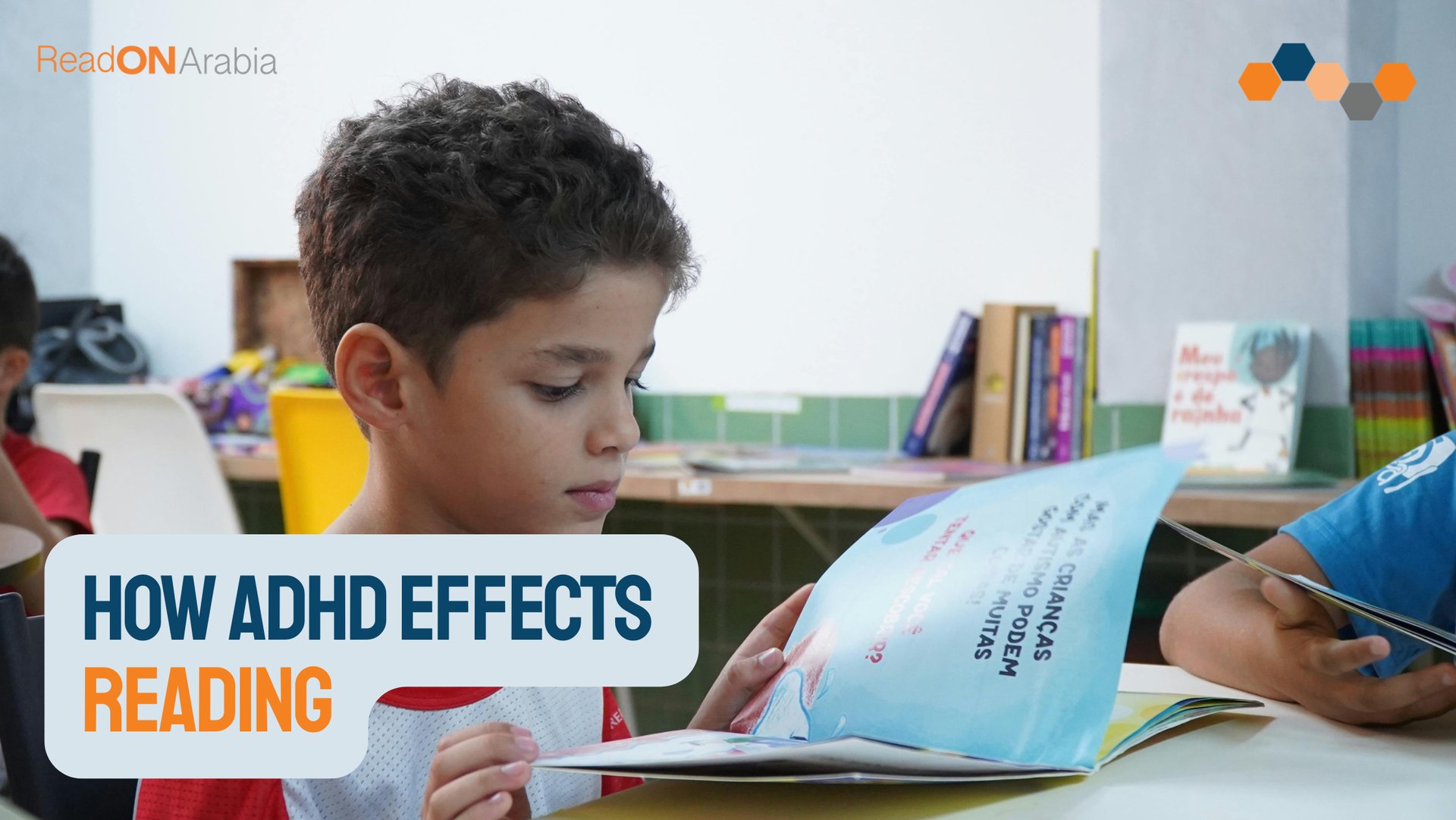
Does ADHD Affect Reading?
Yes, ADHD can affect reading, particularly reading comprehension, consistency and stamina.
Reading requires several mental processes to work together. A child must recognise words, understand their meaning, ignore distractions, remember earlier sentences and connect new information with what they already know.
ADHD may make some parts of this process more difficult, including:
Staying focused through a long passage
Remembering information from one sentence to the next
Returning attention to the correct place after becoming distracted
Monitoring whether the text still makes sense
Slowing down instead of rushing through the page
Beginning or completing an assigned reading task
A child may therefore appear to read fluently but struggle to explain the main idea, answer questions or retell what happened.
How ADHD Affects Reading...and What Actually Helps.
A child may read every word on a page correctly and still reach the bottom without remembering what they have read.
For some children with ADHD, recognising the words is not the main difficulty. The greater challenge may be maintaining attention, holding information in working memory and connecting ideas across several sentences.
Research suggests that children with ADHD can experience difficulties with reading comprehension, although the way ADHD affects reading differs from one child to another. Working memory appears to play an important role, but it is not the only factor involved.
The answer is rarely to tell a child to “try harder” or “just concentrate.” Children usually need reading tasks and environments that are better matched to how they process information.
7 . Keep Reading low pressure and positive
Repeated correction can make reading feel like a test.
Praise useful behaviours rather than only correct answers:
“You noticed that sentence did not make sense.”
“You went back and found where your attention shifted.”
“That summary captured the main idea.”
“You stayed with a difficult paragraph.”
A calm, supportive environment can help reduce the frustration and anxiety a child may associate with reading. The original Autism Parenting Magazine article similarly emphasizes patience, acceptance and lower-pressure reading practice.
Seven Reading Strategies for Children With ADHD
Frequently Asked Questions
2 . Give Reading a Purpose
Before the child begins, provide one simple question to answer.
For example:
Why did the character leave home?
What are the three stages of the water cycle?
Which fact surprised you most?
A clear purpose gives attention somewhere specific to go. It also turns reading from a passive activity into a search for meaning.
Avoid giving the child a long list of questions before reading. One or two clear targets are usually easier to manage.
3 . Make Reading Active
Encourage the child to interact with the text instead of only looking at it.
They might:
Underline one important phrase
Circle an unfamiliar word
Place a small mark beside the main idea
Predict what will happen next
Summarise a paragraph in one sentence
Draw a quick picture of what they understood
The Autism Parenting Magazine article that inspired this discussion recommends underlining important words and returning to the last marked phrase when attention is lost.
This creates a visible “return point,” so the child does not need to restart the entire page.
4 . Reduce Distractions..but Personalize the Enviroment
A quiet space may help some children, while complete silence may feel uncomfortable to others.
Experiment with:
Clearing unnecessary items from the desk
Turning off notifications
Moving away from doors, televisions or busy walkways
Using a reading guide or blank sheet to reveal one line at a time
Trying a comfortable chair, standing position or appropriate fidget
Keeping only the book and one pencil visible
The CDC recommends limiting distractions but also advises adults to observe what helps or distracts each individual child.
The goal is not to create the “perfect” environment. It is to identify the conditions under which that particular child reads most successfully.
5 . Use Movement Breaks before Attention collapses
Do not wait until the child is completely frustrated.
After a manageable section, offer a brief movement break. The child might stretch, walk across the room, carry something to another table or complete a few simple movements.
The break should be short and predictable. A timer or visual schedule can help the child understand that they are returning to the text.
Allowing breaks and opportunities to move is among the classroom accommodations identified by the CDC for children with ADHD.
6 . Separate Reading Practice from Comprehension Practice
Sometimes a child is working so hard to decode the words that little mental energy remains for understanding the story. Parents and educators can occasionally separate the two goals.
For example:
Let the child listen while an adult reads a challenging passage
Take turns reading paragraphs
Allow the child to follow the text while hearing it
Discuss the story orally before asking for written answers
This does not replace direct reading instruction. It allows the child to engage with age-appropriate ideas while continuing to receive support for foundational reading skills.
Is ADHD a Reading Disability?
ADHD is not the same condition as dyslexia. However, ADHD and reading disorders can occur together.
ADHD primarily affects areas such as attention regulation, impulse control and executive functioning. Dyslexia more directly affects skills involved in accurate or fluent word reading, spelling and language processing.
Research has estimated substantial overlap between ADHD and dyslexia, although figures vary depending on how the conditions are assessed. One research review reported bidirectional co-occurrence estimates of approximately 25% to 40%.
A child may therefore have:
ADHD without dyslexia
Dyslexia without ADHD
Both ADHD and dyslexia
Another language, learning, sensory or emotional difficulty affecting reading
This distinction matters because a child who struggles to decode words may require explicit, structured reading instruction. Attention strategies alone will not address an underlying reading disorder.
What Should You Avoid?
Avoid assuming that every reading problem is caused by ADHD.
You should also avoid:
Increasing the amount of reading as a punishment
Making a child restart an entire page after one mistake
Comparing the child with siblings or classmates
Correcting every error while the child is reading
Treating avoidance as proof that the child is lazy
Relying only on concentration exercises when decoding is weak
Making medical, dietary or supplement changes without qualified professional guidance
The objective is to understand what is getting in the way: attention, word reading, language comprehension, working memory, anxiety, visual or auditory demands—or a combination of factors.
When Should a Child Be Assessed?
Consider speaking with the child’s teacher, special educator, paediatrician or another qualified professional when:
Reading performance is significantly below expectations
The child persistently struggles to sound out words
Spelling and reading fluency are also affected
Reading difficulties continue despite targeted teaching
The child experiences significant anxiety or loss of confidence
Difficulties are affecting several school subjects
Parents or teachers suspect ADHD, dyslexia or another learning difference
A comprehensive assessment can help distinguish between an attention-related difficulty and a specific reading disorder. It can also identify whether both are present.
Final Thought
For a child with ADHD, reading difficulty is not always about the words.
Sometimes the child can decode every sentence but cannot stay connected to the meaning long enough to build understanding.
Smaller reading sections, active engagement, movement and a more supportive environment can make the task more manageable.
The goal is not more pressure.
It is better-informed, more personalised support.
1 . Break the Text into Smaller Sections
A full page or chapter can feel overwhelming. Cover part of the page or ask the child to read one paragraph at a time.
After each section, pause briefly and ask:
What happened?
Who was this section about?
What was the most important idea?
Shorter sections reduce the amount of information the child must hold and process at one time. The CDC also recommends avoiding unnecessarily long or repetitive assignments for children with ADHD.
Can a child with ADHD be a good reader?
Yes. Many children with ADHD read accurately and may read extensively when a subject interests them. Difficulties can become more visible with long, repetitive, complex or less engaging material.
What is the best reading strategy for ADHD?
There is no single best strategy. The most useful starting combination is often shorter sections, a clear purpose, active marking, regular comprehension checks, fewer distractions and planned movement breaks.
Why can my child read the words but not understand the passage?
The child may be using much of their mental effort to decode the words, or they may be losing information because attention and working memory are overloaded. Language comprehension or an underlying reading disorder may also contribute.
Should children with ADHD read in silence?
Not necessarily. Some children perform best in silence, while others benefit from quiet background sound, movement or reading aloud. Observe the child’s performance rather than applying one rule to everyone.
How long should a child with ADHD read at one time?
There is no single ideal duration. Begin with a period the child can complete successfully, followed by a brief review or movement break. Gradually increase the duration when the child is ready.
Can ADHD and Dyslexia occur together?
Yes. They are separate conditions, but they frequently co-occur. A child showing difficulties with word reading, spelling and fluency should receive appropriate literacy assessment rather than having every problem attributed to attention.
How Can ReadON Support the Skills Behind Learning?
Successful reading depends on more than seeing words on a page. Attention, working memory, executive function, auditory processing and visual processing may all contribute to how effectively a child engages with learning.
ReadON is a digital cognitive therapy platform designed to exercise cognitive and learning-related skills through structured activities. Its framework includes attention, working memory, executive function, auditory processing and phonological awareness among its target areas.
ReadON should not be presented as a replacement for an ADHD assessment, medical treatment, specialist literacy instruction or professional therapy. Instead, it can form part of a broader support plan developed around the child’s individual needs.
Why Does My Child With ADHD Forget What They Read?
One possible reason is working memory.
Working memory allows a reader to temporarily hold information while processing what comes next. For example, a child needs to remember the beginning of a sentence while reaching its end. They must then connect that sentence to the next one.
When attention shifts, some of that information may be lost before it has been fully processed. The child continues moving their eyes across the page, but the meaning stops building.
This does not mean the child was lazy or did not care. It may mean that the reading task placed greater demands on attention and working memory than the child could manage at that moment.
ReadON’s scientific framework also identifies attention, working memory and executive function as important cognitive processes involved in learning and comprehension.
Signs ADHD May Be Affecting Your Child’s Reading
Parents and teachers may notice that the child:
Reads the same line several times
Frequently loses their place
Skips words, sentences or sections
Rushes through punctuation
Avoids longer passages
Understands short texts but struggles with chapters
Can discuss favourite topics but disengages from assigned reading
Reads accurately but cannot explain the main idea
Becomes restless or frustrated during reading
Needs repeated reminders to return to the task
These signs do not diagnose ADHD or dyslexia. They simply indicate that the child may need closer observation and appropriate educational or professional support.